Archive for the ‘Technical’ Category

Simpler Machines

I’m going to be explaining manual transmissions to Gamma in a month or two, so this is my homework for that.

The pre-requisite for my class Learn to Drive Stickshift is an understanding of Simple Machines.

The classic list of Simple Machines is Lever, Wheel, Pulley, Inclined Plane, Wedge, and Screw.

I disagree with the list, as it could be simplified. I.e. those are not the simplest machines. One of my favorite parts of science was simplifying things by cancelling units. I am going to try to show that here.

First is Screw, the most egregious example, the Screw is not a Simple Machine. It is a Compound Machine.

Take a wheel, make it thicker, and apply an inclined plane to it.

That’s a screw, just an inclined plane-wheel. Since Screw can be reduced to two simple machines, it does not count as a simple machine.

Next is Wedge. While I don’t think this can be reduced, I do think this is just an inclined plane.

If we move an object up an angled surface, we call that surface an inclined plane. But if we take an angled surface and move it into an object, we call it a wedge.

I disagree that wedge gets to be a known as a unique simple machine. I actually don’t care which term we use (it is easier to say “wedge” than “inclined plane”).

Wedge and Inclined Plane do the same thing – use an angled surface to make it easier to separate things. For the wedge, one is generally separating one object into two. For the inclined plane, one is generally separating one object from another. But it’s the same basic concept, and it shouldn’t count twice.

Since we’re on the topic of Inclined Plane, I thought there should be some overlap between Lever and Inclined Plane. I thought about how to combine them, or reduce Lever somehow. But my conclusion was they are both simple machines, and it may help to think of the lever not as a lever but think of it as a fulcrum. Replace Lever in the list with Fulcrum and it is more obvious that it’s not sharing anything with Inclined Plane.

Next is Pulley. It should come as no surprise to you that I consider a pulley to be a wheel plus a rope. Since one of its components is a Simple Machine, it can be reduced and is therefore not a Simple Machine.

I am open to the possibility that Rope should be promoted to Simple Machine.

Pulley, on the other hand, is just an application of Wheel. It’s a similar comparison to Wedge and Inclined Plane. Wedge and Inclined Plane are the same machine, just one is moving and one is stationary.

It’s the same with Wheel and Pulley – it’s the same machine, just one moves (a distance, yes they both move in that they rotate) and one is stationary.


That’s the end of my complaining about the classifications of Simple Machines.

For your homework for next week, please come prepared with an explanation of how a wheel can be reduced to an infinite number of very small levers around a central fulcrum.

The four wheels were underneath the borders, and the axles of the wheels were on the stand. And the height of a wheel was a cubit and a half.

1 Kings 7:32

On Heating

Today is going to be a discussion of heating and heat transfer, in the context of what heating systems make sense for buildings

First off, let’s start with some basics.  Things, in general, are either good conductors of heat or bad conductors of heat.  Bad conductors are good insulators.  What are some good insulators?  People normally think of fiberglass insulation.  A nice thick sweater is also a good insulator.  There’s also that expanding foam stuff.  They all have in common that they hold air.  All the fluffiness is there to have a bunch of air pockets.  Ideally, the best insulator would a vacuum (no air), but since that’s impractical for most things, we go with the next best thing which is air.  

So air is a good insulator and therefore bad conductor of heat.  

Next, let’s go with air movement.  

What is windchill?  I’m hoping you all know the answer already, but just for completeness I’ll say here that is it the feeling that moving air imparts to people.  The faster the air moves, the lower the temperature feels.  So blowing air brings a cooling effect.  Nothing new there, I hope.  

Now let’s combine those two principles.  Let’s say, in theory, we wanted to design the worst possible system for heating a place where people are.  What would we do?  First, we’d start by using a bad conductor of heat as our heat-delivery medium.  Right?  Let’s heat up something that doesn’t hold heat well, and send that around to distribute heat.  Next, we’d use something that would make things feel cooler, rather than warmer – make sure windchill is involved.  

Put it all together, and you get standard forced-air systems that are in just about every house built these days.  

For those of you familiar with thermodynamics, please tell me how you could make a worse system for delivering heat to make people feel warm.  From both an efficiency standpoint and comfort standpoint.  

The only reason it’s popular is that it is cheap to install and maintain.  It can be done shoddily and people won’t notice if there’s a small leak in the ductwork.  

The other thing that’s bad about it is the vents are annoying.  We have one in the kitchen floor right where a chair is and I can’t always scoot the chair where I want because the leg catches on the lip of the vent.  

In case you’re wondering, I’m a proponent of radiant heating.  It uses water, something that conducts heat well, and it doesn’t blow on you.  And it’s quiet.  And you can put furniture anywhere you want, without worrying about blocking anything.  

On the other hand, it does make sense to use air for cooling.  You want windchill, to help you feel cooler.  

But whoever does not fall down and worship shall immediately be thrown into the middle of a furnace of blazing fire.

Daniel 3:6

On Sevenths

As we are homeschooling our 4th grader this year, and as we are starting the fractions section of math, I have been thinking of fractions. In particular, the sevenths.

All other fractions for single-digit denominators made sense to me, regarding converting them to decimals. But not seven.

The closest thing to not making sense other than seven is that 9/9 = 0.999999… and seems to me that 9/9 approaches 1 but never equals it. The difference is 0.0repeating1.

But on to sevenths. I have been telling my son that he needs to know his multiplication facts by heart, and I then thought it odd that I never tried to memorize what 1/7 is. So I set myself to doing it. I must have, long ago, decided it made no sense and was not worth doing, but doing it now it’s not so bad and I don’t know why I took so long to do so.

One seventh is 0.142857 with those 6 digits repeating forever.

For those starting to get bored, here’s where it starts to get interesting, at least for those of us who can find numbers interesting. And if numbers don’t interest you, maybe patterns will?

(more…)

Duct Fans, Ranked

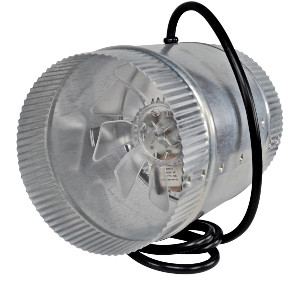
I needed to help out some of the ductwork in a section of the house that wasn’t getting as cool as the rest of the house. It was due to poor airflow, so I had to add a return and a duct booster fan. I went through a few different types, so I’ll try to help you out should you ever need a duct fan.

I’m starting with the cheapest fan and working up from there.

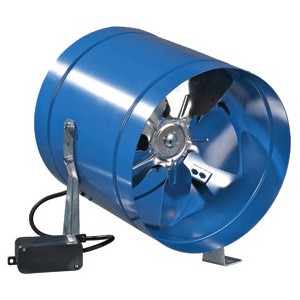
1. The Big Box Special

image of a cheap duct booster vent fan

This one can be picked up in stock at various home improvement stores. The other fans in this post have to be ordered.

While it does move air, it doesn’t move it much and it’s rather noisy. If you aim this fan at a butterfly, you would be suggesting a direction to the butterfly.

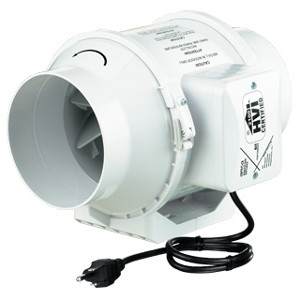
2. The Better-Constructed Version

image of a decent duct booster vent fan

This one is more solidly constructed, which helps with NVH. And durability too, I expect. It moves slightly more air. The butterfly will have to put in some effort to overcome this fan.

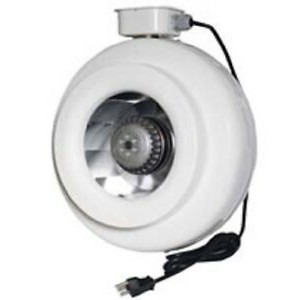
3. The Best One

image of a very good duct booster vent fan

This one has a different style. There is actually some engineering going on in there – not just a tube with a fan in it. I got the Silent version and it is much quieter. I wouldn’t say it’s silent, but you don’t need to raise your voice to be heard over it. It also comes with an Off-Low-High switch, which is handy. The butterfly will not get a choice with this fan.

4. Overkill

image of a crazy duct booster vent fan

This one is ridiculous. It is a centrifugal fan. It moves a lot of air. It has to spool up – I turned it on and thought “That’s not very impressive” but after 5 more seconds I changed my mind. It needs to be attached to something secure because of the force the spinning produces. Have you gone to a science center or hands-on museum that had the display where you hold a spinning bicycle tire or other rotating mass and you felt it pulling you left or right depending on which way you tilt it? If so, then you know how this thing feels while it’s going. And it is very loud.

If you aim this one at a butterfly you will kill it. Also, do not wear a necktie near this fan.


Those are my thoughts on various duct fans or inline boosters or what-have-you. The best one is not that much more money than the better-constructed axial fan, but the performance is much better, so I’d say it’s the best value. I’m sure there’s a use for the centrifugal fan, but not for anything residential.

He caused the east wind to blow in the heavens And by His power He directed the south wind.

Psalm 78:26

Switch, or Else

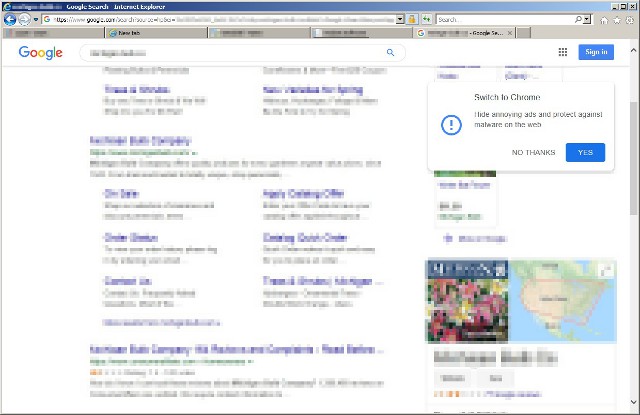
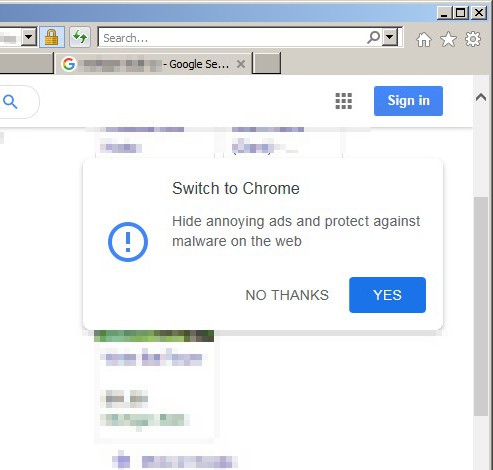
For some months now, I have been asked by Google to switch my browser to Chrome. It looks like this:

image of a pop-up asking me to switch to chrome browser

image of a pop-up asking me to switch to chrome browser

I took the Chrome statement at face value: if I would switch to Chrome I would be able to better control/limit advertisements via pop-up blocker settings and other such things.

I just realized this last week that I have understood it incorrectly.

What they are saying is that if I switch to Chrome I will stop seeing their annoying ad for Chrome.

The leech has two daughters, “Give,” “Give.” There are three things that will not be satisfied, Four that will not say, “Enough”:

Proverbs 30:15

Self-Fulfilling AI Prophecy

It is socially irresponsible for filmmakers, authors, and others to continue to produce content that portrays AI taking over the world and threatening mankind.

Before going into that, I need to make sure we’re all on the same page regarding how AI learns things. It is not at all fancy or complicated. I think “recognize a pattern based on” is a more appropriate term for what AI does than “learn”, since learning involves intelligence and AI is just a lot of data points and a big memory. But I’m going to keep using the term “learn” because it’s shorter and easier and is the accepted terminology. Also, I think the concept of the singularity is wrong – it can never happen because of things like “life” and “soul”. Anyways…

If you want AI to learn about something, just give it a bunch of that thing and tell it those are that thing. If you tell it the wrong things, on purpose or on accident, the AI will learn the wrong thing.

The current popular example of this is sheep. Lookup “AI learns sheep wrong” and you’ll get a bunch of articles about the image processing AI being trained to recognize sheep. It was fed a bunch of photos of sheep, and it learned to recognize sheep. The problem is that all the photos were of sheep in fields, so the AI associated “sheep” with grassy meadows. If you gave it a photo of a grassy field with no sheep, it would classify it as a sheep. And if you gave it a photo of someone holding a sheep, it would classify it as a dog. It doesn’t really know what a sheep is, it can’t look at its inputs and realize if something is amiss. It just finds a common pattern and applies that to the term from the inputs.

Now apply that to the future of AI. If, as the fear goes, AI grows exponentially and takes over the world, how is it going to train itself? In other words, how will a self-aware AI know what a self-aware AI is supposed to do? It would gather instances or descriptions of AI and learn from it.

So now what are all the examples of AI running the world? Science-fiction books and movies and maybe a few TV shows. So now imagine an AI takes over the world in real life. It is processing all sorts of things including those books and movies, and it comes to understand that an AI ruling the world must necesarily be bad for people – it must fight them or enslave them or terminate them or whatever. Because those are all the examples it has, so that’s what it will learn.

Dear science fiction writers: please help the future of the world by producing stuff that shows an AI running the world and being helpful and kind to people. In case that day comes, we want some good examples for it to learn from.

But they mingled with the nations And learned their practices,

Psalm 106:35

Torque and Horsepower

A popular online debate is “what is the difference between torque and horsepower?”

I am here to answer that question. But I’m going to tie it to sports. And I’m just going to summarize it. So if you like discussing power in engineering units and if you appreciate football and if you like short blog posts, this is for you.

Simply put: horsepower wins games, torque wins championships.

That is all.

He will also lift up a standard to the distant nation, And will whistle for it from the ends of the earth; And behold, it will come with speed swiftly.

Isaiah 5:26