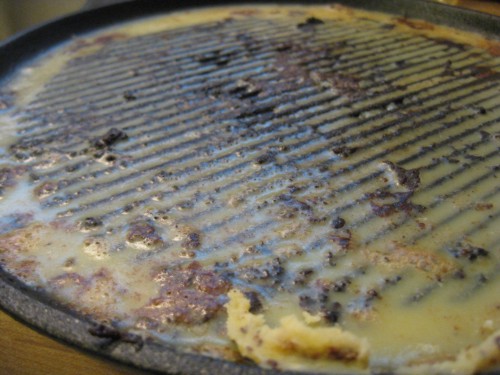
Gamma pointing to a greasy frying pan: What’s that?
Me: That’s grease.
Gamma stares blankly
Me: It, uh, comes out of the meat when you cook it.
Gamma still not sure
Me: It’s like frosting for the meat!
Gamma walks away, satisfied at the answer (or at least convinced that I don’t have a good explanation)
Maybe butter would have been a better word to use.
Also the fat of an animal which dies and the fat of an animal torn by beasts may be put to any other use, but you must certainly not eat it.
Leviticus 7:24
Posted in Conversations | Leave a Comment »


There are two types of people in the world: those who don’t really think about Comic Sans and those who disdain Comic Sans.
I was wondering why there are so many people against the poor font. I came up with the answer of “Sans”. Maybe the problem is that there are no serifs.
What if someone added serifs to Comic Sans?
What would it be called then? Sans means without. What is the opposite of sans? Con means with. I thought about Comic Con, but that name is already taken. Not for a font, but instantly recognizable to those who care about fonts. I guess the next best thing is the name Comic Serif.
So, here is Comic Serif. Go download it from fontgrill.com, if you want.

The nice thing about spoofing Comic Sans is that you can’t get it wrong. If you make a good font, people will be impressed. And if you do a poor job on the font, people will think you’re trying to be funny by mocking Comic Sans.
They are worthless, a work of mockery;
In the time of their punishment they will perish.
Jeremiah 10:15
Posted in Technical | Leave a Comment »
We went to a nearby rodeo recently. Here are some photos and commentary from that.
We start with the horses lined up for the opening cermonies:
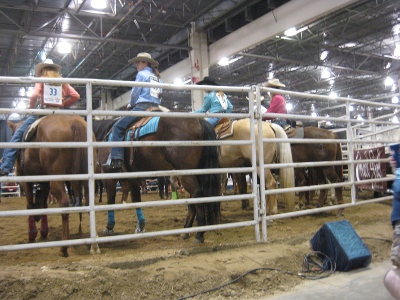
which include running the flags around while the anthems are sung:

Read the rest of this entry »
Posted in Family | 2 Comments »
It’s been a little while since I shared some of the boys’ schoolwork on the blog, so here are some papers they brought home:
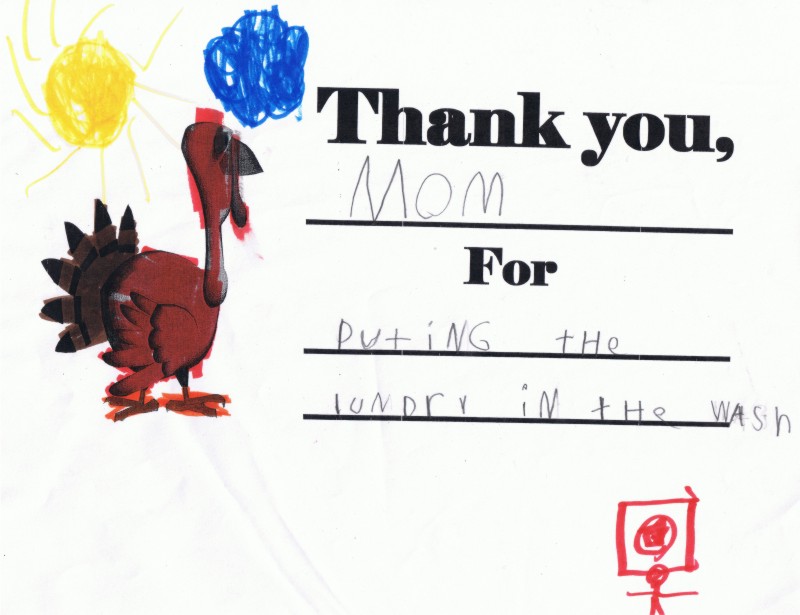
Of all the things mom does, laundry is forefront in a 6-year-old mind.
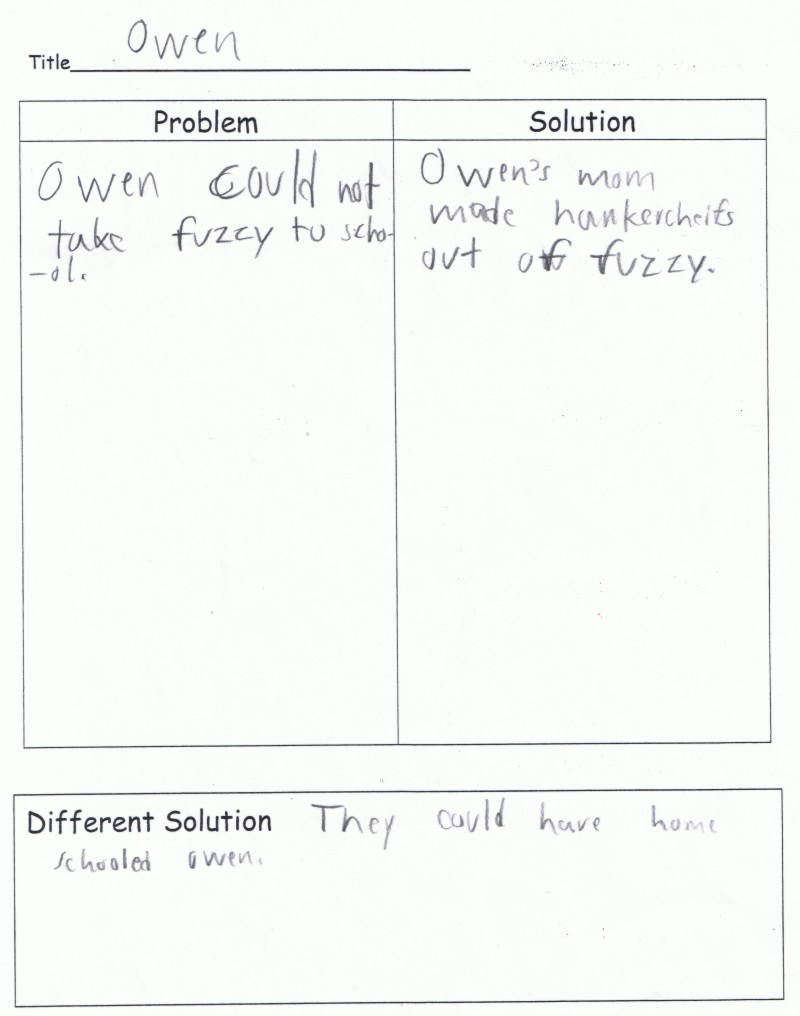
This one may require some explaining. They read a story about Owen, a child who wanted to bring his blanket to school but the school wouldn’t let him so Owen’s mom cut the blanket into handkerchiefs so that Owen could have a bit of his blanket at school.
Part of Alpha’s assignment was to think of alternate ways to solve the problem. His solution: don’t go to that school anymore. Your solution depends on if you think the problem is the blanket or the school.
If Mary had been homeschooled, her lamb would not have caused any problems.
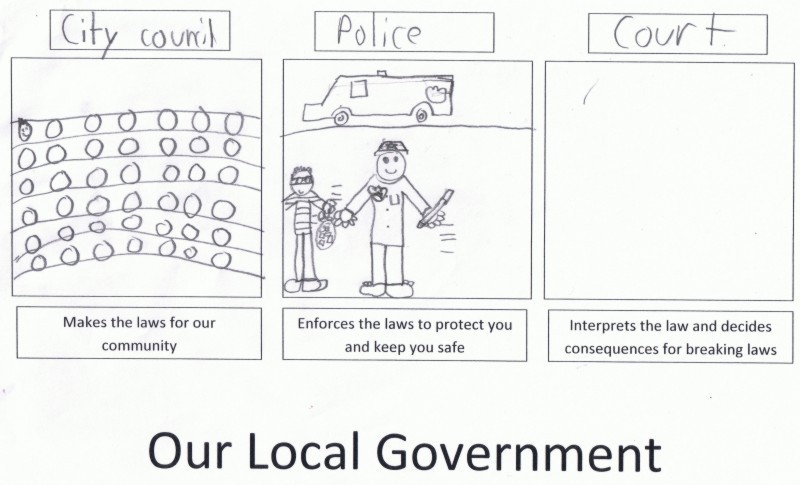
Two notes on this one:
1. I’m taking that as a good thing that my child doesn’t know what the inside of a court room looks like.
2. The picture of the city council looks suspiciously like the council as depicted in the Star Wars movies. I should confirm if that was his basis.
When they had brought them, they stood them before the Council. The high priest questioned them,
Acts 5:27
Posted in Family | 2 Comments »
Dinosaurs grew larger the longer they lived, so you could judge the age of a dinosaur by its size.
Here’s a handy chart to show you, using metric/SI prefixes, how to gauge the relative size of a certain flying dinosaur.

But that drawing is missing an important part of the pterodactyl. So here’s another version:

I’m sure you won’t forget your prefixes now.
I would have kept going, but there wasn’t room on the image for petadactyl. Plus, the version with the silent P would have been ppetadactyl, which is just silly.
Do not rejoice, O Philistia, all of you, Because the rod that struck you is broken; For from the serpent’s root a viper will come out, And its fruit will be a flying serpent.
Isaiah 14:29
Posted in Humor | 1 Comment »
It seems my son has inherited my tendency to take questions literally and answer them as asked (not necessary as intended).
Alpha: What can I do to help with dinner?
Wife: Do you want to set the plates?
Alpha: No, not really.
Alpha starts to run upstairs
Wife: Now why did you ask if you weren’t going to do it?
Alpha: Daddy told me to ask.
You ask and do not receive, because you ask with wrong motives, so that you may spend it on your pleasures.
James 4:3
Posted in Conversations | 1 Comment »
It’s March, the start of the spring quarter and therefore time for a change to my WordPress theme.
For this one, you either get it or you don’t.
Expect some tweaks in the days to come.
Side note:
The Commodore 64 started production in 1982.
The Nintendo 64 started production in 1997.
Windows XP 64 started production in 2001.
Which was ahead of its time?
That list is not only in chronological order, it is also in order of awesomeness (starting with the most and ending with the least).
(And don’t bother trying to explain the difference between bits of processor width and K of RAM – I’m talking just about the number 64 here.)
There is no remembrance of earlier things; And also of the later things which will occur, There will be for them no remembrance Among those who will come later still.
Ecclesiastes 1:11
Posted in Technical | 4 Comments »

 This is Alpha, the first-born, when he was 2YO.
 This is Beta, the second-born, when he was about 2YO.
 This is Gamma, the third-born, when he was about 18MO.