
Archive for June, 2025

Jesus’ Last Name

Our pastor had a topic with the kids in youth group – since some of them don’t have much church background – on Jesus’ name.

One of the things he made sure to tell them is that “Christ” is not Jesus’ last name. Christ is His title – Jesus the Christ, which means the Mesiah or The Promised One.

So far none of the kids have asked what Jesus’ last name actually was. Pastor did bring it up in a separate discussion and I joked that Jesus’ last name was Carpenter, because that was the family business.

Here in America, and I assume we brought the habit over from Europe and didn’t just make it up ourselves, people got their last names from what they did. Back in the old days at least, before machines came along. Now it seems that no one gets assigned last names anymore – we just keep inheriting them.

Anyway, it used to work like this:

You needed some horseshoes or a plow, you went to see John the Smith.
You needed some grain turned into flour, you went to see John the Miller.
You needed some barrels to hold the grain, you went to see John the Cooper.
And so on.

People’s trades became their last names because everyone kept referring to them by that. That’s why Americans would think of Jesus’ last name as Carpenter.

But it wouldn’t have been that.

In the Middle East they did (and still do) things differently. You are not known by what you do, rather you are known by your family.
Your last name is who your father is, such as John son of John (or John Johnson, which is a thing Americans are also familiar with from some other parts of Europe, and also Wisconsin).
And, as I learned from someone who spent time in Iraq just over a decade ago, once you as a male have a son, your last name changes from whose son you are to whose father you are. First-born son only.

Since Jesus was from the Middle East, I expect the custom would have been for Him to be called by His father’s name. Earthly father, since that’s how the people who would be talking to Him would know Him.
And that is what we see in the Bible, although we non-Middle-Easterners don’t recognize it as a last name. Let’s look at John 6:42a:

And they were saying, “Is this not Jesus, the son of Joseph, whose father and mother we know?”

Right there, you see the people give Jesus’ first and last name. First name: Jesus. Last name: Son of Joseph, or Barjoseph as they would have said.

Not sure how useful that bit of information was, but it may come in handy if you have a discussion about what Jesus’ last name was.

Also I find in interesting that Barabbas, whom you may recognize from Jesus’ trial, was known as Barabbas. “Bar” meaning “son of” and would have been the equivalent of his last name. I’m guessing he was an only (male) child so he could have been known as the “son of Abbas” and it would have been unique enough to identify him. Or maybe there were some complications in his family life and all he knew was his dads’ name but not his own, and that propelled him into a life of crime. It’s also interesting to consider his kids’ last name: would it be Barbarabbas?

I will make Your name known among all generations; Therefore the peoples will praise You forever and ever.

Psalm 45:17
Ope-ium

One of the more recent phrases that seems to have taken off in talk radio, specifically sports radio, is “_ope-ium”.

It is, of course, a riff on the word “opium”. I first heard it as “hope-ium” – meaning that a fan of a particular team is relying on hope to get him through the season. Like one would rely on opium to get through the day.

And then a few weeks the radio hosts used the term “cope-ium”, to indicate that the hope-ium wore off and reality is setting in and now the sports fan is trying to cope with the team being worse than expected.

Why stop there? Noticing the trend, I was inspired to coin the rest of the “ope-ium” terms. Here we go:

  • Hope-ium : Anticipating a good season, expecting the best of the situation
  • Cope-ium : Recognizing things aren’t as good as they should have been but rationalizing it
  • Mope-ium : Realizing things can’t be rationalized and letting it get you down
  • Nope-ium : Giving up on the team, jumping off hte bandwagon
  • Dope-ium : Not sure on this one; I think I’ll go with “dope” as in “cool”
  • Lope-ium : Addicted to walking with long strides
  • Pope-ium : Looking to the head of the Catholic Church to get your fix
  • Rope-ium : Addicted to, umm, rope?
  • Taupe-ium : Needing beige colors to get you through the day
  • Slope-ium : Rise over run, baby
  • Trope-ium : Overuse of cliches

I see the terms stopped being sports-related partway through. Oh well. I did not keep the topic in scope-ium.

Where then is my hope? And who looks at my hope?

Job 17:15

Spring Book Thingy 2025

Here are some more mini reviews of books. I’m going in order of when I read them.

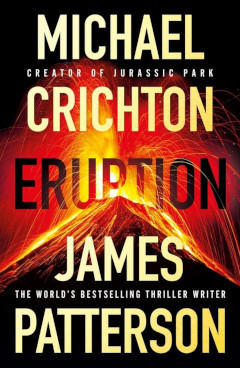
First up: Eruption by Michael Crichton and James Patterson

image of the Eruption book by Michael Crichton and James Patterson

I wanted to try something other than middle-grade fiction for a change, and this book caught my eye at the library.

It was a decent book but it was a little too far-fetched for my tastes. I have no problem with far-fetchedness in general – a lot of the fiction I read is not realistic (see “The Rithmatist” below, or any number of the fantasy/sci-fi stuff). My problem is this book was written to be realistic but it wasn’t.

I’ve seen both the Volcano and Dante’s Peak movies (tip: watch Volcano and skip Dante’s Peak). Same concept, came out at the same time, but I prefer Volcano because it wasn’t as cliche and also didn’t have a romance angle.

Anyway, this book seemed to do too much – it was action plus suspense plus a volcano plus a worldwide health disaster. It could have worked but it seemed generally too shallow. Plus the resolution of the problem was rather abrupt, unlikely, and made it seem like they ran out of ideas and just wanted to end the book.

This was a draft started by Crichton and then completed by Patterson well after Crichton’s death. I wasn’t sure how much of it was Crichton and how much was Patterson so I decided to get a book that was Crichton only – see Pirate Latitudes next.

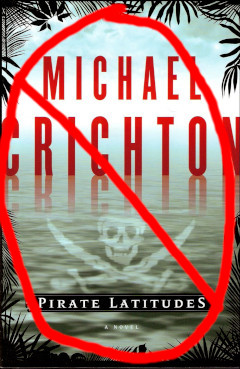
Next up: Pirate Latitudes by Michael Crichton

image of the Pirate Latitudes book by Michael Crichton

Flipping through Crichton books at the library, this was the one that looked most interesting by its cover and blurb inside the cover. I checked it out and read it and only after finishing it did I realize this one was not published during his lifetime. With no one else listed as co-author I have to assume it was all Crichton, not sure if he would have changed anything had it been published while he was alive.

I would say this one is not worth reading, mainly because of the adult content. If you watched the Pirates of the Caribbean movies then you cover most of the plot points of this book. But the book adds a lot more bawdiness.

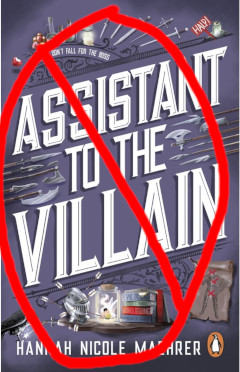
Next up: Assistant to the Villain by Hannah Nicole Maehrer

image of the Assistant to the Villain book by Hannah Nicole Maehrer

Disclosure: I didn’t read this book. I am putting its review here so you’ll know why I didn’t read the book. My wife read the book and said I wouldn’t like it.

It apparently has a lot of objectionable material. It sounded like an interesting premise and I would have like to read it, but I didn’t want to read all that other stuff like “romance” and bad words. So I don’t know how well the premise was implemented, but it doesn’t matter because it was marred by so many problems that didn’t have to be there.

And that’s why I stick with middle-grade fiction.

Next up: Interior Chinatown by Charles Yu

image of the Interior Chinatown book by Charles Yu

Ok, so I should have said I mostly stick with middle-grade fiction. My wife picked up this book, and I had seen the trailers for the TV show based on it, so I was interested enough to try it.

It started off well. My wife may have looked over at me a couple times to see what I was laughing at. But as the book went on it was no longer funny and more sad. I don’t regret reading the book but my thoughts on it were underwhelming enough that my wife skipped reading it. And much of it is written as a script, so it takes a little getting used to.

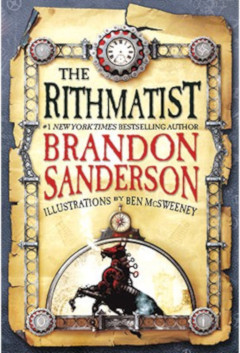
Last up: The Rithmatist by Brandon Sanderson

image of The Rithmatist book by Brandon Sanderson

I was looking for another Brandon Sanderson book, but our library didn’t have it in stock. Not feeling like putting it on hold and waiting for it to come in, I grabbed one of his books that was on the shelf and that looked interesting to me.

The idea of the book, as portrayed on the opening flap, looked good. Once I started reading it, it was a bit much. I was not a fan after a few pages, I didn’t feel like learning another world setting. I don’t think the author did anything wrong – I just wasn’t in the mood.

But I stuck with it and after a few chapters it was worth it. It ended up being a very good book and I would have recommended it with no qualms, except that it is the first book of a series and no other books exist yet. And it’s been many years so at this point I don’t know that we’ll see the sequel(s).

I still recommend it, just with an asterisk that if you like it then you’ll be disappointed that the story is unfinished. The book is mostly self-contained, but it ends with a major plot point open.

That’s it for this review. More book reviews coming up later this year.

And as he finished speaking all these words, the ground that was under them split open

Numbers 16:31

Atrophy Brain

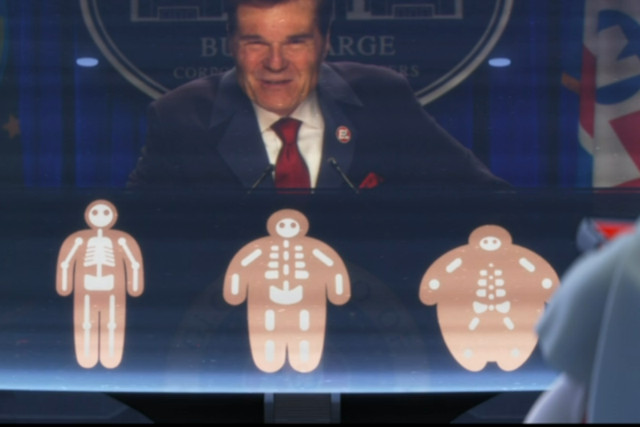
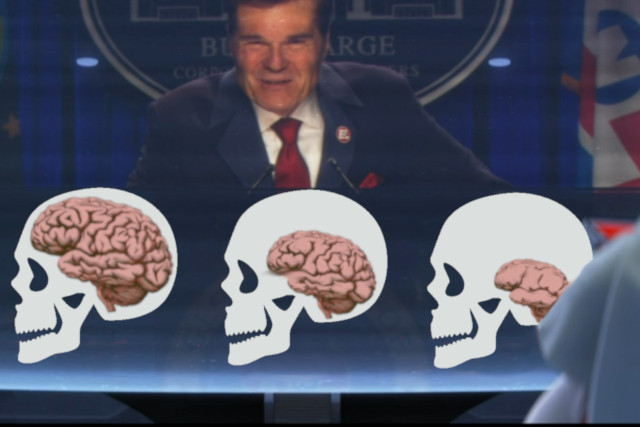
There’s a scene in the movie Wall-E where the guy is explaining that after so many generations in space, human bodies experience loss of bone density – some skeletal changes. If you’re not using something, it wastes away. Like if you’re bedridden for a while, your muscles atrophy.

Here’s a still from the movie. If you’re looking for it, it’s at time 48:17 into the movie, if you’re looking at the progress bar in Disney+.

picture from the Wall-E movie showing how the skeleton atrophies over time

And each time technology progresses, there’s a study that shows how humans are using their brains less. For example, everyone used to know many phone numbers. Now with cell phones doing all the remembering for you, people don’t know anyone’s phone number anymore. I know my wife’s phone number because she’s had that number before smartphones existed so I had to know it. But I don’t know any of my children’s phone numbers because I never have dialed their numbers. Since phones remember things for people, people are losing their memorization capability.

Phone numbers was an early indicator. Next thing that comes to mind is navigation. People used to be able to read maps. Now they just know how to follow the line and the instructions that come up on the screen. Being the navigator in the car these days means selecting the destination on the nav unit, not actually knowing where you are. So people are losing their navigation/direction/way-finding abilities.

Now with AI doing a lot of things, people are losing those abilities too – writing essays, putting thoughts together, putting lists together, drawing pictures of themselves as Star Wars characters, etc. More skill atrophying. But at least we humans are retaining the ability to identify all stoplights and crosswalks in various photos, thanks to captcha for honing those skills.

I’m sure there are some more examples, but that’s just what I came up with quickly. The point of this blog post is not to make a list of everything that’s atrophying, rather I just wanted to show the results of all such degradation in the style of Wall-E.

Here it is:

picture from the Wall-E movie showing how the brain atrophies over time

That’s all really. Keep using your brain – exercise it – so that you don’t lose functionality.

The mind of the discerning acquires knowledge, And the ear of the wise seeks knowledge.

Proverbs 18:15