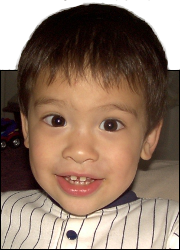
 This is Alpha, the first-born, when he was 2YO.
 This is Beta, the second-born, when he was about 2YO.
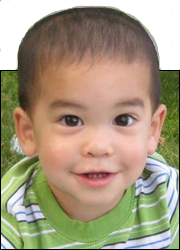 This is Gamma, the third-born, when he was about 18MO.
Improving the Privilege Walk
Oct
29
2025
The “privilege walk” is an group exercise that started about 10 years ago, from what I can tell. It had a bout of popularity, but I have no idea how much it is still used. It seems to have had a wide spread, as far as various organizations using it. I first heard of it being used in educational settings, specifically universities.
And I think that’s a good place to use it, and high schools, and maybe even middle schools. But their focus is on the wrong things.
I looked at the privilege walk instructions from a few organizations, and they were fairly similar, so I’m going to summarize them here.
First of all – the goal/purpose: to be aware of the intersections of privileges and socioeconomic variables.
This somewhat falls into my old post of raising awareness. What good is raising awareness? In this case, they usually pair being aware with improving relationships with other people. Not a bad goal, but that’s not going to improve people’s lives much.
Secondly – the questions. There are a lot of questions, the lists I saw ranged from 25-45 questions. Here’s a sample:
- If one or both of your parents graduated from college, take one step forward.
- If anyone in your immediate family has ever been addicted to drugs or alcohol, take one step back.
- If you have been divorced or impacted by divorce, take one step backward.
- If you came from a supportive family environment, take one step forward.
- If you have more than fifty books in your household, take one step forward.
- If anyone in your immediate family has ever served time in a state or federal penitentiary, take one step back.
There are a bunch more questions, but you get the idea. Half of the questions in the lists I reviewed seemed to be various ways of asking “if you are a white male, step forward”. I’m ignoring those questions though, for reasons you’ll understand by the end of this post.
And last – the assessment. The standard practice is for the privilege walk leaders to ask the participants some review questions after the walking part. The purpose of the walk seems to be to get people to be introspective, to get them to see how they fit in society and compare that to how others fit in. And thus have more understanding for others’ situations.
Things like
- What did you feel like being in the front of the group? In the back? In the middle?
- Were certain sentences more impactful than others?
- What question made you think most? If you could add a question, what would it be?
- What happened during the exercise? Were you surprised by anything?
But what good is that, and how does that help other people?
I’m more of a practical person – less talking and more doing. So this exercise seems pointless to me because the goal is talking and there’s no doing.
My take – there needs to be another section: improving things for the next generation.
This applies more to privilege walks that occur at high schools and especially colleges. Because that’s when people are planning their future and making life decisions.
For this section, the action would be to look at the questions and see what you can do so that the next generation of students have as few steps back as possible. Because where does the next generation of students come from? From the current generation of students, several years down the road. But the time to get people thinking about how to live their adult lives is just before they establish their adult lives.
For some of the questions, there’s nothing that can be done, because it’s based on ethnicity. But let’s look at what can be done.
Main things I saw:
- Get your degree. Your kids can take a step forward because you finished college.
- Get married. Kids of single parents take a step back. Don’t have kids if you’re not married.
- Stay married. Divorce causes a lot of problems, and has a large impact on kids in the family.
- Be a good parent. Be there for your kids, and support them. Not just financially, but emotionally by telling them positive things.
- Stay out of trouble. Addiction or jail take you away from your kids. Live your life right and it will improve not just your life but others’ lives too.
There are some other concrete actions you could get out of the questions, but I like those because they’re free (other than getting your degree). But since I’m picturing most privilege walks happening at colleges, those people are already in the process of getting their degrees.
And weddings might be expensive, but getting married is not expensive. Just go to your local courthouse and have the judge perform the ceremony. Being a supportive parent and staying out of trouble don’t cost any money, but they may cost you time and effort. Really, much of these boil down to “don’t be selfish”.
All that to say – the privilege walk can be redeemed and focus some attention on getting people to live their lives better. And the more “rightly” the current generation lives, the better off the next generation will be.
As for the things you have learned and received and heard and seen in me, practice these things, and the God of peace will be with you.
Philippians 4:9